New olive oil in Florence: from bruschetta to traditional dishes
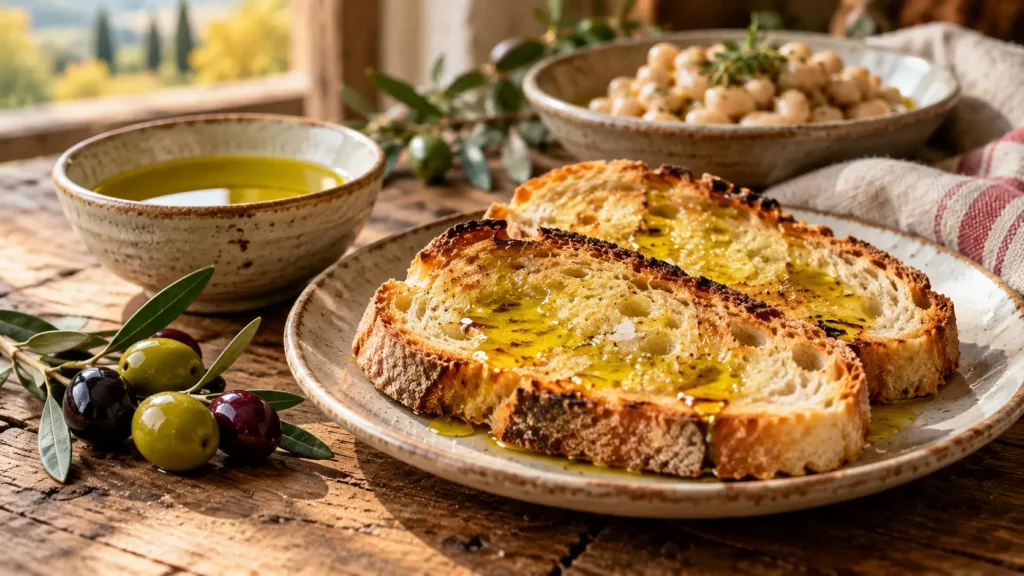
Some flavours tell the story of autumn in Tuscany: toasted bread, a warm soup and a drizzle of new olive oil poured raw. The olive harvest opens a long-awaited moment, when freshly pressed oil takes centre stage at the table once again.
For anyone looking for olive oil in Florence, Tuscan cooking offers many ways to discover its taste. From fettunta to ribollita, just a few ingredients are enough to let the aromas of new oil shine.
New olive oil: the taste of the new harvest
New olive oil is the oil made from the olives of the latest harvest. Tasting it means discovering the result of a season of work in the olive grove, with characteristics that vary according to the olive varieties, their ripeness and the way they are processed.
On the nose it may recall fresh grass and other green notes; on the palate it can express bitter and peppery notes of varying intensity. The simplest way to get to know it is to taste it raw, starting with a slice of bread.
Tuscan fettunta: bruschetta with new olive oil
Among the pairings for new olive oil, Tuscan fettunta holds a special place. It is an essential preparation in which every ingredient can be tasted.
To make it, toast a slice of Tuscan bread, rub it lightly with a clove of garlic if you like, and add new olive oil and a pinch of salt. Pour the oil while the bread is still warm: the heat helps release its aromas.
For a first tasting, try it with nothing but bread and oil. It is an invitation to linger over the flavour of the new harvest.
Ribollita and new olive oil: a meeting of Tuscan flavours
Tuscan ribollita, made with bread, cavolo nero, beans and vegetables, is one of the dishes best suited to a drizzle of new olive oil.
Add it directly to the plate, just before serving. Used raw, the oil completes the soup and lets you appreciate its character alongside the sweetness of the beans and the flavour of the vegetables.
It is a pairing that speaks of a cuisine built on simple ingredients, seasonality and care in using up leftovers.
Cannellini beans with raw olive oil
A plate of cannellini beans with new olive oil is another way to bring traditional flavours to the table. Serve them warm, with a little salt, a grind of pepper and the oil added at the very last moment.
The soft texture and delicate taste of the beans leave room for the oil. You can serve them with toasted Tuscan bread, as a rustic starter or a side dish.
Autumn soups: a drizzle of oil before serving
New olive oil also pairs well with spelt soups, legume soups and creamy soups of seasonal vegetables.
A cream of pumpkin, for example, creates a pleasing contrast between the sweetness of the vegetable and any bitter or peppery notes in the oil. A chickpea or lentil soup, on the other hand, takes on a new nuance with a drizzle poured straight into the bowl.
The advice is simple: taste the soup first, then add the oil a little at a time until you find the balance you prefer.
Vegetables and pinzimonio: how to enjoy new olive oil without cooking
To discover how to enjoy new olive oil raw, try a pinzimonio of fennel, carrots, celery and other seasonal vegetables. Pour the oil into a small bowl and add salt and, if you like, pepper.
Cooked vegetables are also a good place to start: cavolo nero, chard, boiled potatoes or roast pumpkin can become a flavourful side dish with a dressing added just before they reach the table.
Alternating different vegetables lets you discover the pairings you enjoy most with your own oil.
New olive oil in Florence: the pleasure of simple things
You don’t need elaborate recipes to appreciate new olive oil. A fettunta still warm from the grill, a ribollita or a plate of cannellini beans can turn an everyday meal into a tasting occasion.
The bond between olive oil in Florence and local cooking also lives in these gestures: choosing seasonal ingredients, preparing them with care and letting the oil find its place on the plate.
The new harvest is the perfect occasion to rediscover these habits and bring the flavours of the Tuscan autumn to the table.